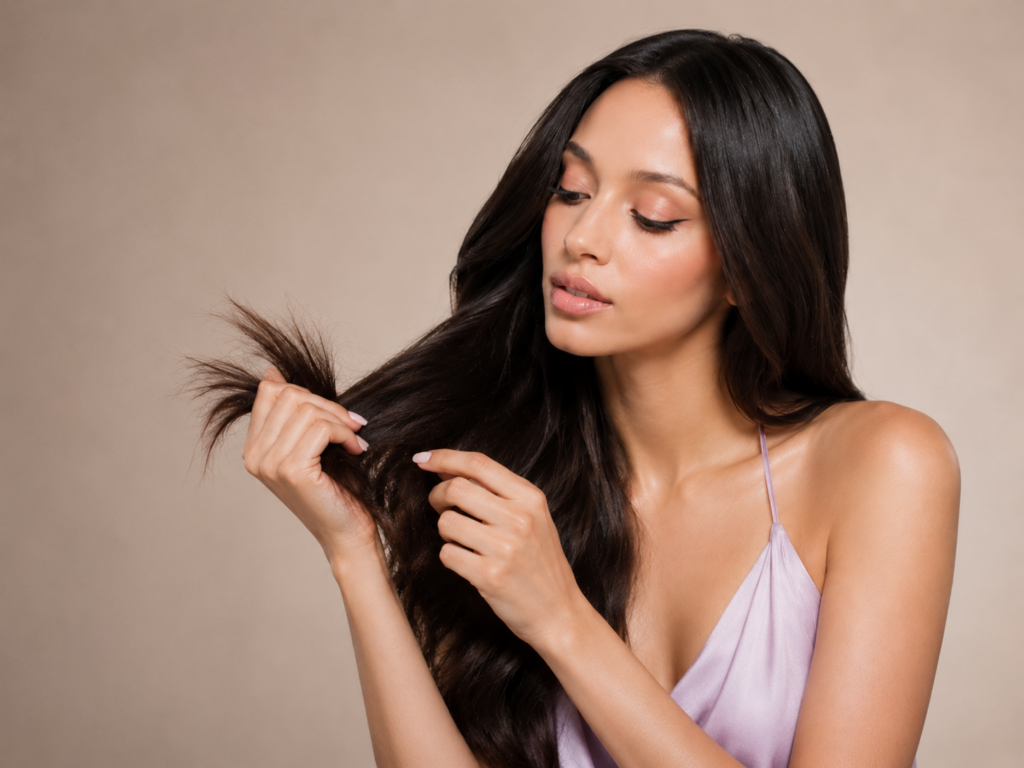

You set the alarm. The alarm did not go off. You have twelve minutes to be out the door, and one look in the mirror confirms that today is not a wash day, even though your roots are clearly arguing otherwise. This is the moment dry shampoo was invented for.
The catch is that most people are using it in ways that actively work against them. They spray too close, dump on too much, skip the part where the product needs time to do its job, and end up with hair that looks chalky, flat, or somehow more lifeless than before they started.
This guide walks you through how to use dry shampoo properly across every format on the market, from classic aerosols to non-aerosol powders to the newer foam formulas. By the end, you will know exactly where to apply it, how much you need, how often is too often, and the small adjustments that take your results from passable to genuinely salon-fresh.
What Is Dry Shampoo?
Dry shampoo is a waterless hair refresher built to soak up the oil that collects at your scalp between washes. It comes in three main formats: aerosol sprays, loose powder dry shampoos, and foam or mousse versions. Most formulations rely on absorbent ingredients like rice starch, tapioca starch, corn starch, silica, or kaolin clay, often combined with a touch of denatured alcohol to speed up evaporation and lift the appearance of grease.
How It Actually Works
Your sebaceous glands, which sit alongside your hair follicles, produce a natural oil called sebum. Sebum is what keeps your hair conditioned and your scalp protected, but as it builds up across the hair shaft, your roots start to look weighed down and slick. Dry shampoo works by binding to that excess oil, neutralizing odor, and giving you a clean, lightweight finish without water touching your hair.
What It Is Not
Dry shampoo is not a substitute for washing. It absorbs oil but does not actually cleanse, which means sweat, dead skin cells, environmental pollutants, and product residue stay put. Think of it as a styling extender, not a wet shampoo replacement.
When to Use Dry Shampoo
The honest answer is, whenever your second-day hair (or third) starts looking less than fresh. That said, there are specific moments where it really earns its keep.

Best Times to Reach for the Bottle
- Between washes, particularly on day two or three
- Post-workout, when sweat has flattened your style
- Before bed, so it absorbs oil overnight while you sleep
- Between blowouts, to extend a salon style or keep a blowout looking fresh
- On travel days, when a proper wash is not realistic
- For added volume, even on freshly washed fine hair that needs lift at the roots
A Lesser-Known Trick
Apply it before your hair actually looks greasy, not after. Dry shampoo is far more effective at absorbing oil that is just starting to build up than at rescuing roots that are already saturated. A light application the night before a busy morning will pay you back tenfold.
How to Use Dry Shampoo Step by Step
This is where most people go wrong. Skip the rushed two-second spray, and follow these steps instead.
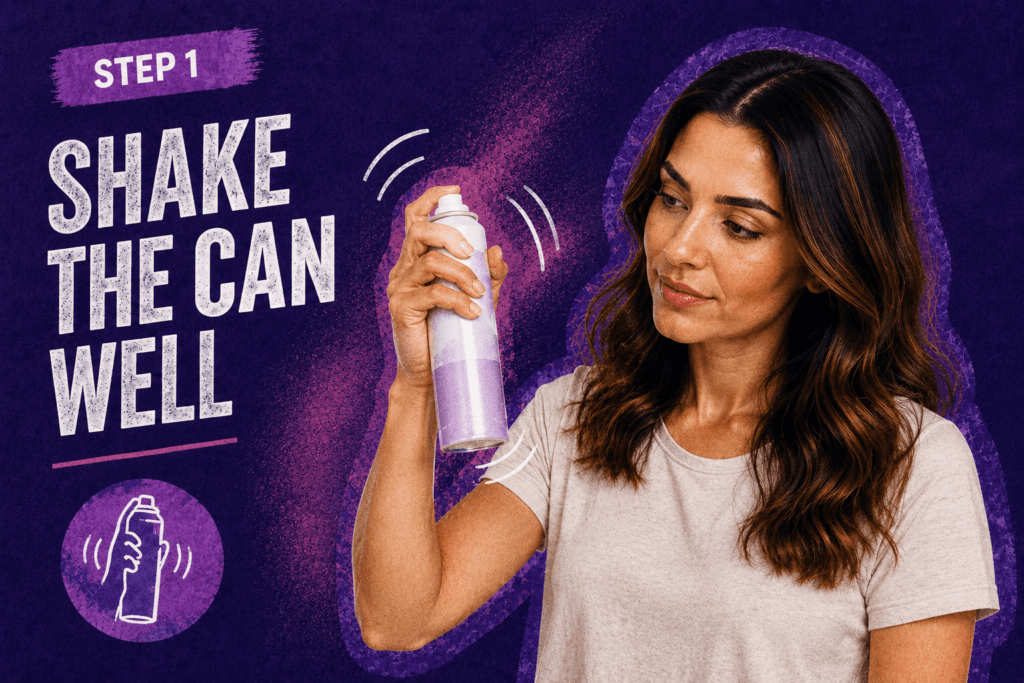
Step 1: Shake the Can Well
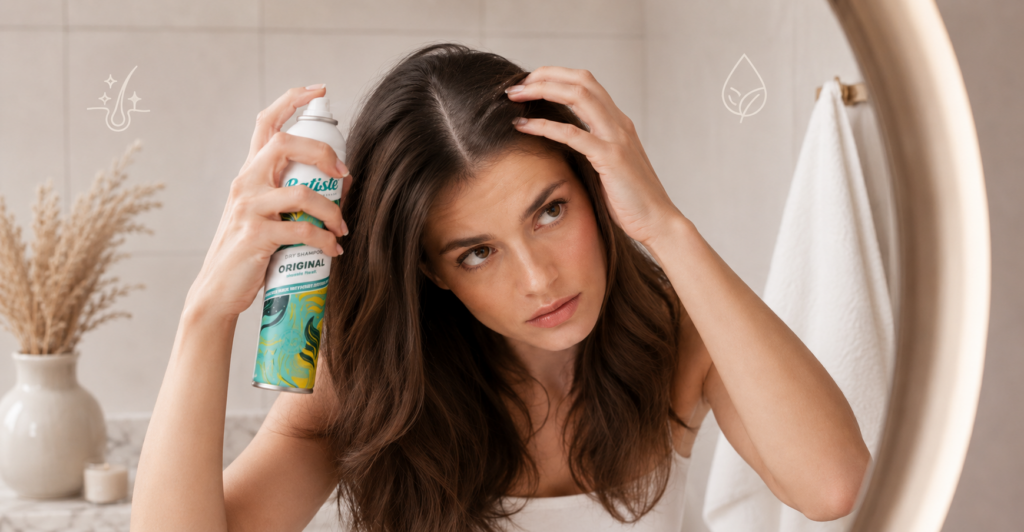
Give the bottle ten solid seconds before you spray. Shaking blends the absorbing powder with the propellant, which delivers a finer, more even mist and dramatically cuts down on white residue.
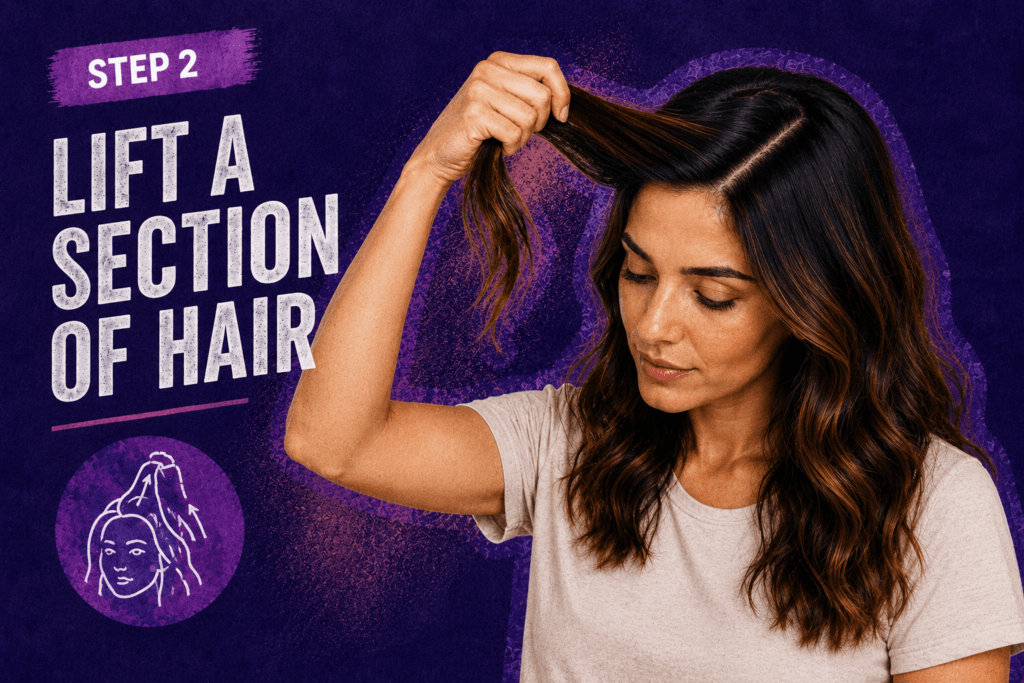
Step 2: Section Your Hair
Lift your hair into rough horizontal layers using your fingers or a clip. Spraying only at your part hits the surface, but it skips the layers underneath where most of the oil actually sits.

Step 3: Hold the Can 6 to 10 Inches Away
Roughly the length of the can itself is a reliable visual gauge. Holding it too close concentrates the starch in one spot and creates a chalky patch. Holding it too far wastes the product into the air.
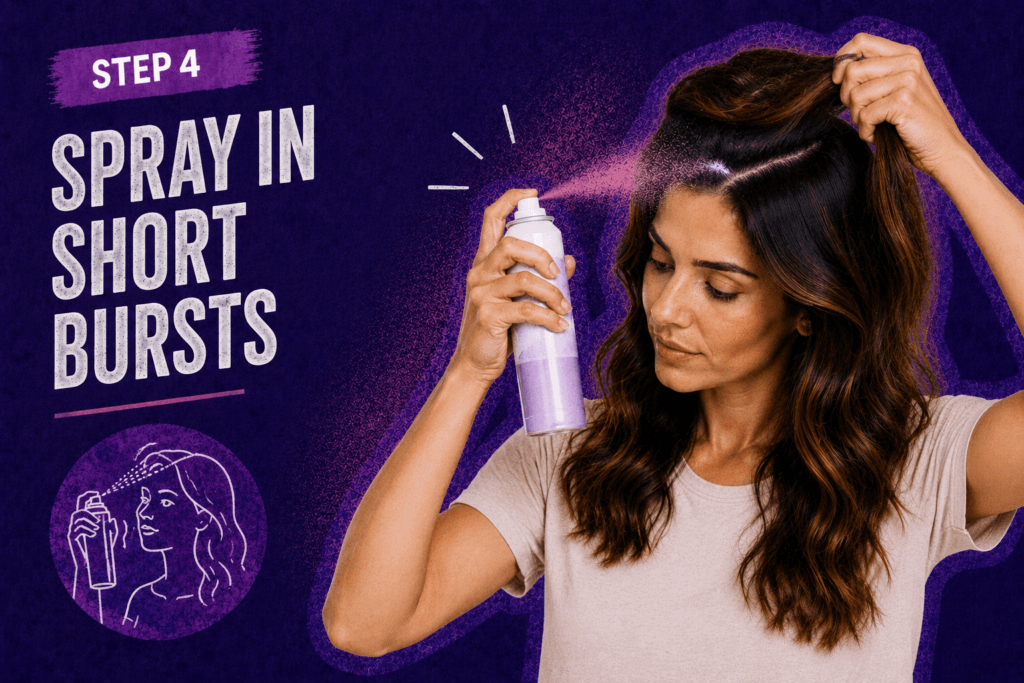
Step 4: Spray in Short Bursts
Aim for the roots in quick, controlled spurts, not a long continuous blast. Move across each section so the product distributes evenly.

Step 5: Let It Sit for 1 to 2 Minutes
This is the step almost everyone skips, and it is the single biggest reason dry shampoo fails. The absorbent ingredients need time to bind to the oil. Walk away. Brush your teeth. Pick out earrings. Just let it work.

Step 6: Massage with Your Fingertips
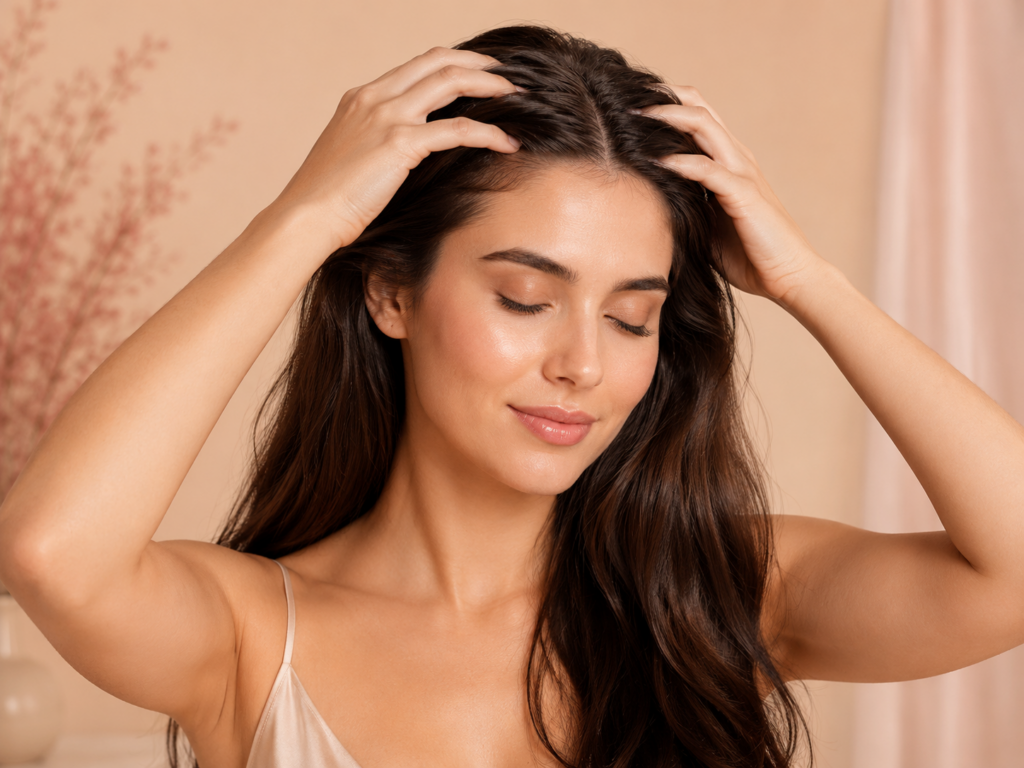
Use small circular motions across your scalp. This activates the formula, distributes it evenly, and makes any visible powder vanish into your hair color.
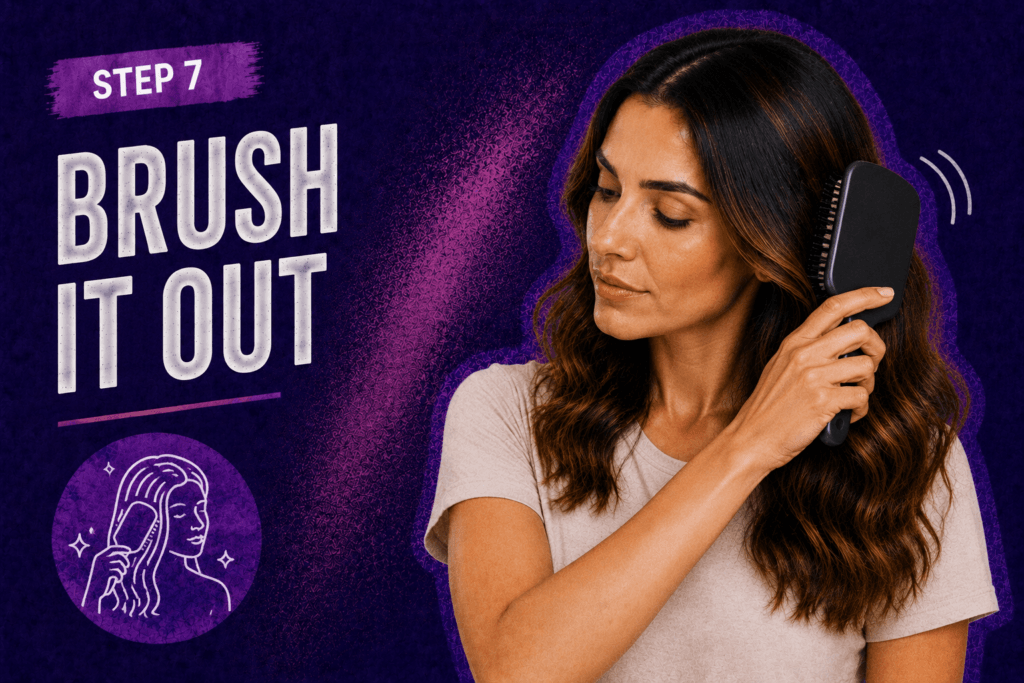
Step 7: Brush It Out
A few quick passes with a paddle brush or boar bristle brush finishes the job. It blends the product seamlessly, removes any leftover residue, and adds a soft, polished finish.
Where to Put Dry Shampoo
Dry shampoo belongs at your roots, full stop. Your mid-lengths and ends rarely produce sebum, so spraying them just makes your hair feel coated and dull.
The Five High-Oil Zones
These are the areas where sebum shows up first, and where your application needs to be most thorough:
- The crown of your head, where natural lift collapses fastest
- The hairline and temples, especially around your face
- Your part line, which is the first thing anyone sees
- The nape of the neck, particularly important if you wear a ponytail or updo
- Behind the ears, where oil tends to accumulate quietly
The Section-by-Section Approach
Take roughly two-inch horizontal sections of hair, lift each one, and spray underneath at the roots. Repeat across the entire head, not just down your part. This is the difference between patchy results and a truly even refresh.
How Much Dry Shampoo Should You Use?
Less than your instincts are telling you. Genuinely.
Start Small, Build Up
Two or three short bursts per section is plenty for most people. Let the product settle, assess how your hair looks and feels, then add more only if you need it. You can layer dry shampoo, but you cannot easily reverse it once your hair feels powdery, stiff, or chalky.
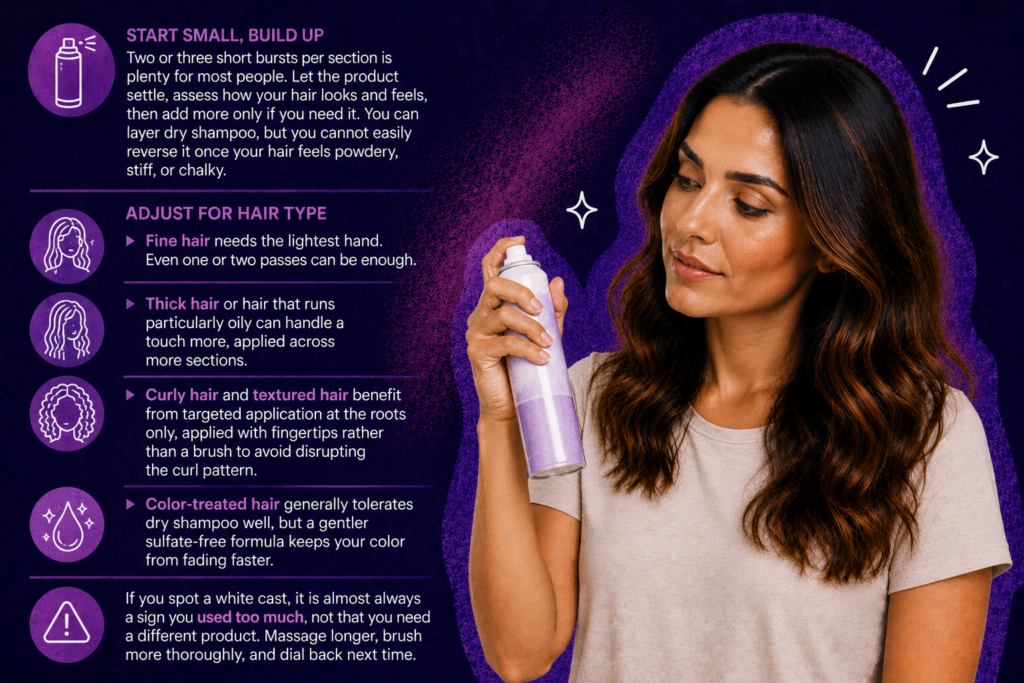
Adjust for Hair Type
- Fine hair needs the lightest hand. Even one or two passes can be enough.
- Thick hair or hair that runs particularly oily can handle a touch more, applied across more sections.
- Curly hair and textured hair benefit from targeted application at the roots only, applied with fingertips rather than a brush to avoid disrupting the curl pattern.
- Color-treated hair generally tolerates dry shampoo well, but a gentler sulfate-free formula keeps your color from fading faster.
If you spot a white cast, it is almost always a sign you used too much, not that you need a different product. Massage longer, brush more thoroughly, and dial back next time.
How Often Should You Use Dry Shampoo?
Most board-certified dermatologists and stylists land on the same answer: two to three times per week, and ideally not more than two consecutive days before doing a proper wet wash.
Why the Limit Matters
Because dry shampoo absorbs oil but does not remove it, repeated application without washing creates scalp buildup. Over time, that residue can clog your hair follicles, trap bacteria, and lead to issues like folliculitis, dandruff, scalp irritation, or even worsened seborrheic dermatitis. None of that is great, and none of it is unavoidable. It is just a matter of using the product the way it was designed to be used.
A Healthy Weekly Rhythm
A balanced routine for most hair types looks something like this:
- Wash your hair every two to three days with a sulfate-conscious shampoo and conditioner
- Use dry shampoo on the days in between
- Add a clarifying shampoo once a week to clear any product residue
- Layer in a deep hair mask or leave-in conditioner on wash day to keep your ends hydrated
Your scalp will thank you, and your dry shampoo will work better when you do reach for it.
How to Use Powdered Dry Shampoo
Powder dry shampoos are the original format and remain a favorite for sensitive scalps and anyone trying to cut back on aerosols. Without propellants like butane or isobutane, the formulas tend to be simpler and gentler, often built around rice starch, tapioca starch, and bamboo stem powder.
Step-by-Step Powder Application
- Tip a small amount into your palm, onto a fluffy kabuki brush, or directly onto your scalp from a sifter-style bottle.
- Pat or dab lightly at the roots. Avoid dumping product in one place.
- Section your hair and repeat across your part, crown, and hairline.
- Wait one to two minutes for the powder to absorb the sebum.
- Massage with your fingertips to blend.
- Brush through with a soft-bristle brush to lift any visible residue.
Tips for Powder Formulas
- A makeup brush or kabuki brush gives you far more control than your fingers and prevents over-application.
- Start with a pinch. Powder always looks lighter than it is.
- If you have dark hair, look for a tinted formula or apply with a brush to avoid the white cast.
- Apply at night for best results. The powder has hours to absorb oil while you sleep, and you wake up looking refreshed.
How to Use Dry Shampoo Mousse
Foam dry shampoos are the newest format on the market, and they behave differently because they contain water as the first ingredient. That changes the rules slightly.
Step-by-Step Mousse Application
- Dispense a small amount into your palm, roughly the size of a golf ball for medium hair.
- Apply directly to your roots in sections, working it in with your fingertips the way you would massage shampoo into your scalp in the shower.
- Distribute evenly across the crown, hairline, and nape.
- Allow to dry naturally, or speed it up with a blow dryer on low heat.
- Brush through once dry to finish.
When Foam Formulas Shine
Mousse versions tend to leave little to no white residue, which makes them a strong choice for dark hair and color-treated hair. They also pair well with a blow dryer if you want to smooth a cowlick or reshape bangs at the same time.
When to Skip Foam
If you have curly hair that you blew out straight, foam dry shampoos can reactivate your natural curl pattern thanks to that water content. For those days, stick with an aerosol or a powder formula instead.
Does Dry Shampoo Absorb Sweat?
Sort of, but not in the way most people assume. This is a common misunderstanding worth straightening out.
Sweat vs. Sebum
Dry shampoo is engineered to absorb sebum, the oily substance produced by your sebaceous glands. Sweat, by contrast, is mostly water and salt produced by a completely different gland system. So while a quick spritz after a workout can mask the appearance of sweaty roots and freshen the smell, it is not actually absorbing the moisture in the way it absorbs oil.
The Workaround
If your hair is genuinely damp from sweat after the gym, hit it with a blow dryer for thirty seconds or so to dry things out, then apply dry shampoo. Skipping this step leads to clumping, streaking, and a sticky, paste-like residue at the roots. Dry shampoo and damp hair are simply not friends.
Is Dry Shampoo Unhealthy?
Used in moderation, dry shampoo is not bad for your hair or scalp. Dermatologists at the American Academy of Dermatology and beyond consistently say it is a fine tool when used correctly, and modern formulas have largely moved away from the harshest ingredients of the past.
What Can Go Wrong
The risks come from overuse, not occasional use. The most common issues include:
- Scalp buildup that clogs hair follicles and traps bacteria
- Folliculitis, which presents as small inflamed bumps that can resemble acne on the scalp
- Dryness, flaking, or dandruff, especially with alcohol-heavy formulas
- Hair breakage if dry shampoo gets layered onto mid-lengths and ends
- Worsening of underlying conditions like seborrheic dermatitis, eczema, or psoriasis
Ingredients Worth Watching
Most reputable modern brands avoid the more controversial ingredients, but it pays to read the label. A few to be aware of:
- Talc, which has historically had contamination concerns
- Benzene, a known carcinogen that triggered major aerosol dry shampoo recalls in 2022
- Aluminum starch octenylsuccinate, which can clog pores in sensitive scalps
- Heavy synthetic fragrances and phthalates, which can irritate sensitive skin
If you have a sensitive scalp or any underlying scalp condition, a quick conversation with a board-certified dermatologist is the smartest first step before adding dry shampoo to your routine. They may also recommend cleaner, fragrance-free, sulfate-free, paraben-free formulas built specifically for sensitive skin.
Common Dry Shampoo Mistakes
Even people who have used dry shampoo for years tend to fall into these traps. If your results have ever felt underwhelming, the answer is probably hiding in this list.
The Eight Mistakes That Sabotage Your Results
- Spraying too close to the scalp. This concentrates starch in one patch and is nearly impossible to blend out evenly.
- Applying to wet or damp hair. Dry shampoo needs dry hair to absorb properly. On wet strands, it clumps into a paste.
- Skipping the wait time. No amount of brushing fixes a product that was not given time to absorb the oil.
- Using too much. More product does not equal cleaner hair. It equals chalky, weighed-down hair.
- Forgetting to brush it out. Brushing distributes the formula, removes excess, and is what actually makes the residue disappear.
- Treating it as a wash replacement. Three or four days of dry shampoo with no actual cleansing creates scalp buildup quickly.
- Spraying only at the part line. Lift the layers underneath and spray the roots that are hidden from view.
- Using the wrong formula for your hair color. Light formulas on dark hair leave a grey cast. Look for tinted or invisible options.
Quick Tips for Fresh, Natural-Looking Hair
A handful of stylist-tested tricks that will instantly upgrade how your hair looks between washes.
Application Hacks
- Apply at night. Spritz before bed and let it absorb oil while you sleep. You will wake up with roots that look freshly washed.
- Get proactive, not reactive. Apply before your hair looks greasy, not after.
- Use a brush instead of fingers for powder dry shampoos. A kabuki brush or makeup brush delivers cleaner results.
- Flip and shake. Bend over, shake your hair out, and stand back up. Instant volume and a more natural finish.
- Hit the back of your head. It is the spot you cannot see, and the one everyone else can.
Pairings That Actually Work
- Pair with a dry conditioner on your mid-lengths and ends to keep things soft and shiny.
- Layer with a texturizing spray for added grit on fine hair that needs to hold a style.
- Follow up with a clarifying shampoo once a week to fully clear product residue.
- Add a hair mask or leave-in conditioner on wash day to balance any dryness from heavy use.
Smart Habits
- Keep a travel size in your bag. Mid-day refreshes are a genuine game-changer.
- Choose the right formula for your hair type. Whether your hair is fine, thick, curly, color-treated, or prone to flaking, there is a tuned formula that works better than a generic one.
- Wash thoroughly on shampoo day. Two lathers of regular shampoo, one a week swapped out for a clarifying shampoo, prevents buildup from creeping up on you.
- Reapply mid-day if you need to. A small follow-up dose at lunch is fine. A massive blast at 9 a.m. is not.