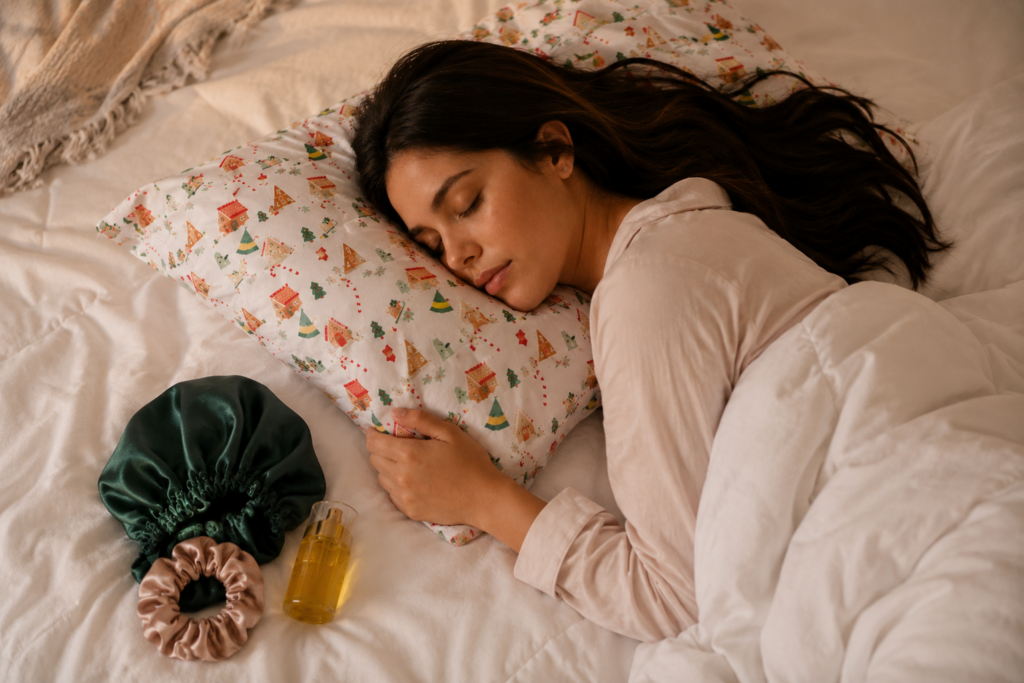
You spend a third of your life with your head pressed against a pillow, tossing, turning, and rubbing your strands against fabric for seven or eight hours straight.
Most people obsess over heat tools, harsh shampoos, and salon visits while completely ignoring the eight-hour window where the real damage happens. Learning how to protect your hair while sleeping is one of the most underrated upgrades you can make to your routine, and the changes take minutes, not hours.
This guide breaks down exactly what’s going wrong overnight, the pillowcase debate (silk vs satin vs cotton), why sleeping with wet hair is worse than most people realize, the hairstyles that cause traction alopecia, and the simple nighttime routine that protects your hair from root to ends.
How Sleep Actually Damages Your Hair (Yes, Really)
Most people don’t think of bed as a hair-damaging environment, but the science is clear. According to a Fox News interview with dermatologist Dr. Noah Gratch and hairstylist Delvecchio, overnight damage is one of the most overlooked causes of breakage, split ends, and frizz.
Here’s what happens between the time you turn off the lights and the moment your alarm goes off in the morning.
1. Friction wears down the cuticle
Your hair has an outer protective layer called the cuticle, which lies flat when hair is healthy and lifts when hair is damaged. Every time you shift positions during sleep, your strands rub against your pillowcase. Cotton, the most common pillowcase material, has a rough, absorbent weave that grips each strand and lifts the cuticle slightly with every movement. Multiply that by 300 to 400 small movements a night and you have a friction event happening roughly every 90 seconds, every single night.
The result over weeks and months: visible frizz, split ends, and short broken hairs you’ll see on your pillow in the morning.
2. Moisture gets pulled from your strands
Cotton is absorbent, which is exactly why it’s popular for towels. The same property that makes it great for drying your face works against your hair at night. As you sleep, the fabric pulls sebum and moisture from your hair shaft and scalp, leaving strands drier and more brittle by morning. This is why people who switch from cotton to silk pillowcases often notice softer hair within a week, even before making any other changes.
3. Wet hair multiplies the damage
When hair is wet, the hair shaft is in its most fragile state. The cuticle is lifted, the inner cortex is swollen with water, and the bonds that give hair its strength are temporarily weakened. Sleeping on wet hair combines maximum fragility with hours of friction, which is the worst possible combination for breakage. The longer you sleep with damp hair, the more cuticle damage accumulates.
4. Tight hairstyles create scalp tension
Sleeping in a tight bun, ponytail, or braid can pull on the hair follicle all night. Repeated tension over months can lead to traction alopecia, a form of hair loss caused by mechanical stress on the follicle. The damage usually shows up first at the hairline, temples, and the part line, where strands feel thinner or shorter than they used to.
5. Trapped moisture changes your scalp environment
A damp scalp pressed against a pillowcase for eight hours creates a warm, humid environment that’s ideal for Malassezia (a yeast linked to dandruff), tinea capitis (a fungal scalp infection), and general bacterial buildup. This is one of the lesser-known reasons dermatologists keep saying not to sleep with wet hair, and it’s something even healthy scalps can struggle with over time.
The Cotton Pillowcase Problem (And Why It Matters)
If your pillowcase is cotton, the problem starts the moment you lay down. According to a study referenced by Blissy, switching from cotton to high-grade mulberry silk can reduce friction against the hair by up to 43%.
Cotton has three properties that make it particularly tough on hair:
- High friction. The cotton weave grips each strand and pulls against the cuticle every time you move.
- High absorbency. It soaks up natural oils, leave-in conditioners, hair serums, and any product you’ve layered on before bed.
- Microfiber roughness. Even high-thread-count cotton has tiny fibers that create micro-tears on the surface of the hair shaft over time.
The cumulative effect isn’t dramatic on any single night, but over years, cotton pillowcases are one of the most consistent sources of low-level hair damage that people never connect to their nighttime habits.
Silk Vs Satin Vs Cotton: Which Is Best For Hair?
This is the most-googled overnight hair question, and the answer has some nuance worth knowing.
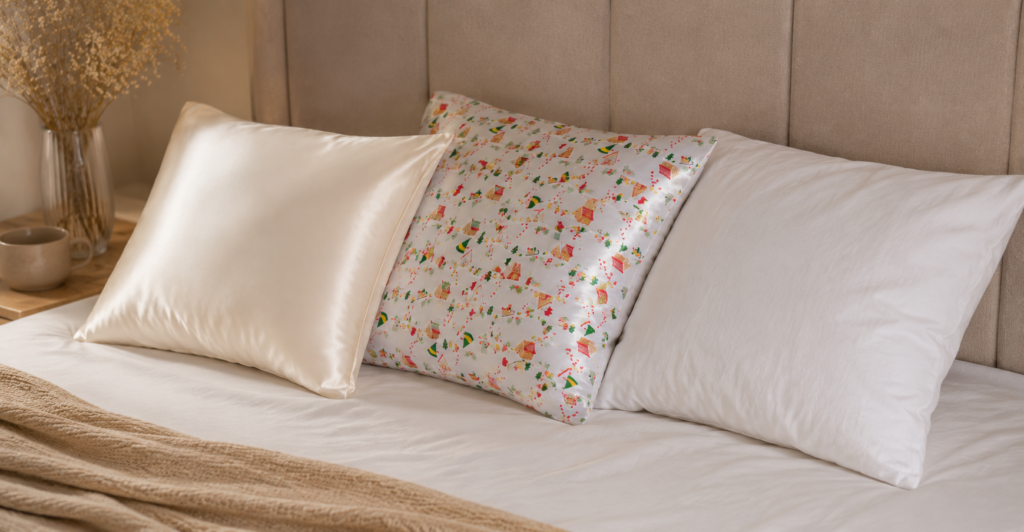
Silk
Pure mulberry silk is a natural fiber made from silkworm cocoons. It’s the gold standard for hair protection because the fibers are naturally smooth, breathable, and far less absorbent than cotton. Silk also has natural temperature-regulating properties, which keep your scalp cooler in summer and warmer in winter. The downside is the cost: real mulberry silk pillowcases run from $40 to over $100, depending on the brand and momme weight.
Look for 22 momme mulberry silk, OEKO-TEX certified, when shopping. Momme is the unit of measurement that indicates silk density, and 22 is the sweet spot for both softness and durability. Anything below 19 momme tends to be too thin to hold up to regular washing.
Recommended silk pillowcases:
- Slip Pure Silk Pillowcase (the original, dermatologist-recommended)
- Blissy 100% Mulberry Silk Pillowcase (22 momme, OEKO-TEX certified)
- LilySilk 19 Momme Pillowcase (more affordable entry point)
- Fishers Finery 22 Momme Pure Mulberry Silk Pillowcase (well-reviewed mid-range option)
Satin
Satin is a weave, not a fiber. It’s usually made from polyester or rayon, which means it’s synthetic, but it mimics silk’s smooth surface at a fraction of the price. Satin reduces friction effectively, doesn’t absorb moisture from your hair, and costs anywhere from $10 to $25 per pillowcase.
The trade-off: satin doesn’t breathe as well as silk. It can trap heat, which can be uncomfortable if you sleep warm or live in a hot climate. It’s also less durable over time. But if budget is the priority, satin gets you most of the hair benefits at a small fraction of the cost.
Recommended satin pillowcases:
- Kitsch Satin Pillowcase (a top-selling affordable option)
- Bedsure Satin Pillowcase (budget-friendly, available in multiple colors)
- NIGHT Trihybrid Satin Pillowcase (a higher-end satin option)
Cotton
The most common pillowcase material is also the worst for hair. If you absolutely must use cotton, look for high-thread-count sateen weaves (a smoother variation of cotton), and consider washing it more frequently to keep oils and product buildup off the surface. But realistically, even the softest cotton is rougher than the cheapest satin.
Silk bonnets and turbans (the alternative to changing your pillowcase)
If you don’t want to invest in new bedding, a silk or satin bonnet is the next-best option. Bonnets fully enclose your hair, which gives you protection no matter what your pillowcase is made of. They’re especially popular for natural, curly, coily, or chemically treated hair, but anyone can use them.
Recommended bonnets and sleep caps:
- Grace Eleyae Satin-Lined Sleep Cap (designed not to slip off during sleep)
- Blissy Silk Bonnet (100% mulberry silk)
- The Natural Hair Shop Satin Bonnet (festive prints, budget-friendly)
This is the single highest-ROI swap for protecting your hair while sleeping. Combined with the rest of the routine below, you’ll see results within two to three weeks.
Why You Should Never Sleep With Wet Hair
This habit causes more damage than almost any other nighttime hair mistake. Hims confirms in their dermatology-reviewed guide that sleeping with wet hair regularly can weaken your strands over time because of the swelling and contracting of the hair cuticle combined with prolonged friction.

Here’s what specifically goes wrong:
- Wet hair is up to 30% weaker than dry hair. Combine that with friction against a pillowcase and you have a recipe for split ends and snapped strands at the mid-shaft.
- The cuticle stays raised longer. This locks in frizz and makes your hair harder to style the next day.
- The damp environment encourages fungal and bacterial growth. Conditions like seborrheic dermatitis and dandruff thrive in warm, moist scalp environments.
- Cuticle swelling weakens the inner lipid layer. Research from 2011 suggested that “a long-lasting wet stage is as harmful as a high drying temperature,” which means going to bed wet may damage hair as much as heat styling.
What to do if you absolutely have to sleep with damp hair
Life happens. Late showers, post-workout washes, kids interrupting your routine. If you can’t fully dry your hair before bed, follow this damage-control sequence:
- Towel-dry first using a microfiber towel (not a regular cotton bath towel). Gently press, don’t rub. Recommended: Aquis Lisse Luxe Hair Turban or Turbie Twist Microfiber Hair Towels.
- Apply a leave-in conditioner or hair oil to seal moisture and reduce friction. Recommended: Olaplex No. 6 Bond Smoother or Living Proof Restore Smooth Blowout Concentrate.
- Blow-dry on the lowest heat setting for at least three to five minutes, focusing on the roots and crown.
- Loosely braid or tie your hair in a soft, low position before bed.
- Sleep on a silk pillowcase or wear a bonnet to minimize friction.
A complete blow-dry isn’t strictly necessary, but aim to be at least 70-80% dry before your head hits the pillow.
The Bedtime Hair Tie Mistake
Most people grab whatever hair tie is on their nightstand without thinking twice. This is one of the most underrated causes of breakage at the hairline, temples, and crown.
What to avoid
- Traditional elastic hair ties with metal clamps or thin elastic bands grip the hair shaft tightly and create a pressure point. Sleeping on them concentrates that pressure for eight hours.
- Tight ponytails placed at the same spot every night cause repeated tension at the same follicles, which can lead to gradual thinning at the part line or temples.
- Heavy, complex updos like high buns with multiple pins create pressure spots that you’ll feel for hours.
What to use instead
- Silk scrunchies distribute pressure evenly across a wider band and slide rather than grip. Recommended: Slip Silk Scrunchies or Blissy Silk Scrunchies.
- Spiral hair coils like Kitsch Spiral Hair Ties reduce kink marks and pressure points.
- Loose braids secured at the end with a silk scrunchie are one of the best protective styles for overnight wear.
For breakage you’ve already experienced, our guide on ways to stop hair breakage covers the recovery routine alongside the prevention tactics here.
Tight Buns, Tension, And Traction Alopecia
If you sleep with your hair pulled into a tight bun or high ponytail every night, this section is non-negotiable.
Traction alopecia is a form of hair loss caused by chronic mechanical tension on the hair follicle. It’s most common in people who wear tight hairstyles long-term (braids, weaves, high ponytails, tight buns), but it can develop from sleeping habits too. The early signs include:
- Thinning at the hairline, especially around the temples
- Small bumps or tenderness at the part line
- Hair that breaks off short instead of shedding from the root
- A “receding” look that wasn’t there before
The fix is straightforward: stop sleeping in tight styles. Switch to loose, low-tension styles like:
- A loose low braid secured with a silk scrunchie
- A loose low bun at the nape of the neck
- A loose pineapple ponytail at the very top of the head (popular for curly hair, no tension on the roots)
- Twist sections (for natural, curly, or coily hair) secured loosely
Early traction alopecia is reversible if caught quickly. Late-stage damage can become permanent, so this is one habit worth fixing now rather than later.
How To Protect Your Hair Overnight (Full Routine)
Here’s the complete pre-bed sequence that protects your strands from root to tip. The whole thing takes about five to seven minutes.

Step 1: Detangle gently
Never go to bed with tangled hair. Knots tighten overnight as you move, creating tension points that lead to breakage. Use a wide-tooth comb or a Tangle Teezer The Original Detangling Brush to work through any knots, starting at the ends and moving up to the roots. Detangling tangled hair in the morning is far more damaging than spending 30 seconds doing it before bed.
Step 2: Apply a leave-in treatment
A lightweight leave-in conditioner, serum, or hair oil seals the cuticle and reduces friction. Focus on the mid-lengths and ends, not the scalp. Recommended:
- Olaplex No. 7 Bonding Oil (great for damaged or color-treated hair)
- Moroccanoil Treatment (a classic argan-oil-based overnight serum)
- Drybar The Hookup Curl Styling Solid (for curls and waves)
- Briogeo Don’t Despair Repair Leave-In Conditioner (for dry or damaged hair)
Step 3: Loosely secure your hair
Pick a low-tension style based on your hair type:
- Straight or fine hair: Loose low ponytail with a silk scrunchie, or simply leave it down
- Wavy hair: Loose braid or low bun at the nape
- Curly hair: Pineapple ponytail at the very crown, secured loosely
- Coily/textured hair: Multiple loose twists or a low pineapple under a bonnet
Step 4: Cover or upgrade the surface
Either wear a silk or satin bonnet or sleep on a silk pillowcase. This is the single most important step. Without it, the rest of the routine still has to fight against eight hours of friction.
Step 5: Once a week, do an overnight hair mask
A weekly deep-conditioning mask worn overnight gives your hair an extra moisture and repair boost. If your hair is color-treated, the overnight mask routine also helps preserve your tone between salon visits, and pairs well with our guide on how to use purple shampoo for keeping brassiness out of blonde or highlighted strands. Recommended:
- Olaplex No. 8 Bond Intense Moisture Mask
- Briogeo Don’t Despair Repair Deep Conditioning Mask
- K18 Leave-In Molecular Repair Hair Mask
Cover your hair with a satin bonnet or a Shower Cap with Satin Lining to protect your pillowcase and trap moisture against your strands.
The Best Overnight Hair Products And Tools
Here’s a quick consolidated list of the most-recommended overnight hair tools by category:
Pillowcases
- Slip Pure Silk Pillowcase (premium silk)
- Blissy 100% Mulberry Silk Pillowcase (premium silk, 22 momme)
- Kitsch Satin Pillowcase (affordable satin alternative)

Bonnets and turbans
Hair ties and scrunchies
Microfiber drying towels
Overnight treatments and oils
Detangling tools
For more on building a wash routine that pairs well with overnight care, see our scalp care tips for healthier hair growth, and if you’re trying to retain length, our roundup of tips to make your hair grow faster walks through the daily habits that protect what you’ve already grown.
Pre-Bed Hairstyles That Actually Prevent Damage
The hairstyle you sleep in matters as much as your pillowcase. Here are the protective styles dermatologists and stylists most consistently recommend.
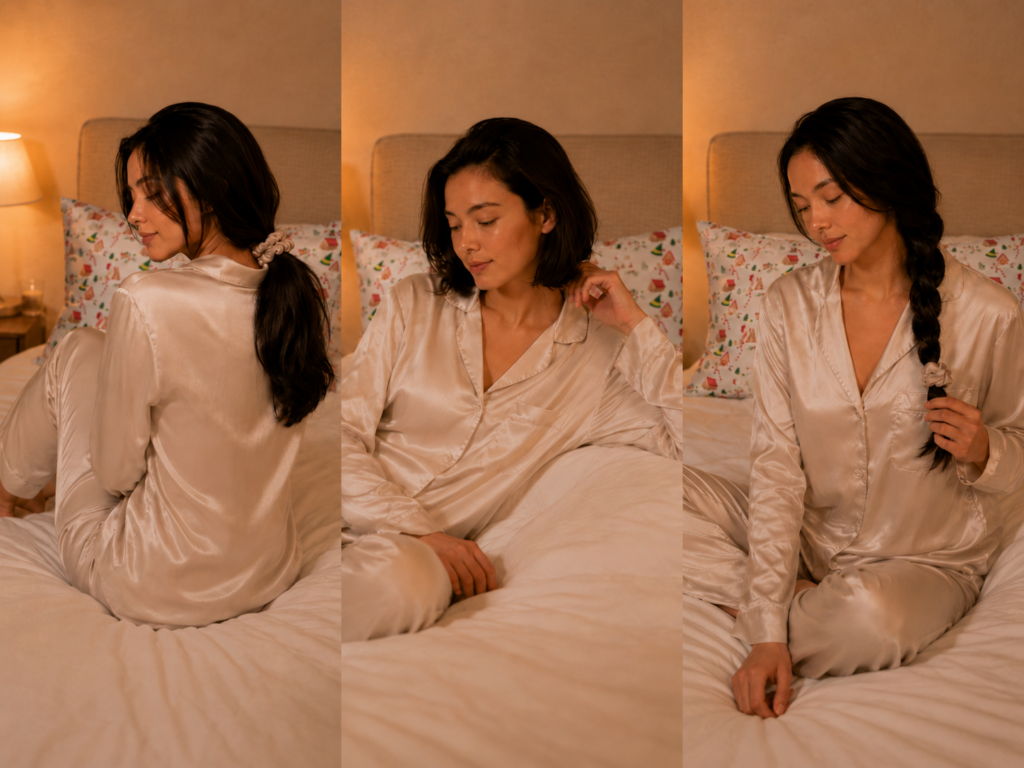
For straight or fine hair
- Loose low ponytail with a silk scrunchie at the nape of the neck
- Sleep with hair down if it’s short and you don’t have tangling issues
- Loose, single-strand braid to keep strands organized without tension

For wavy hair
- Loose braid secured at the end with a silk scrunchie
- Low loose bun at the nape
- Twisted rope braid for added wave definition
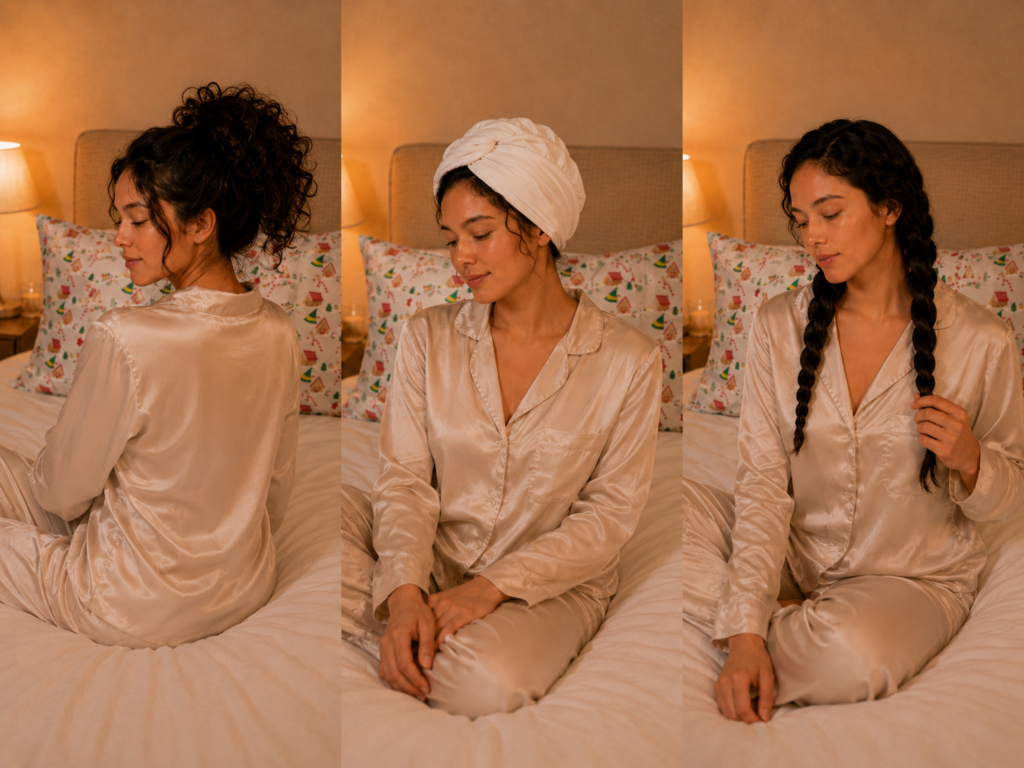
For curly hair
- High pineapple (a loose, very high ponytail at the very crown) to protect curl definition
- Plopping with a cotton t-shirt or microfiber wrap if you sleep with damp hair after curl product application
- Loose two-strand twists for length retention
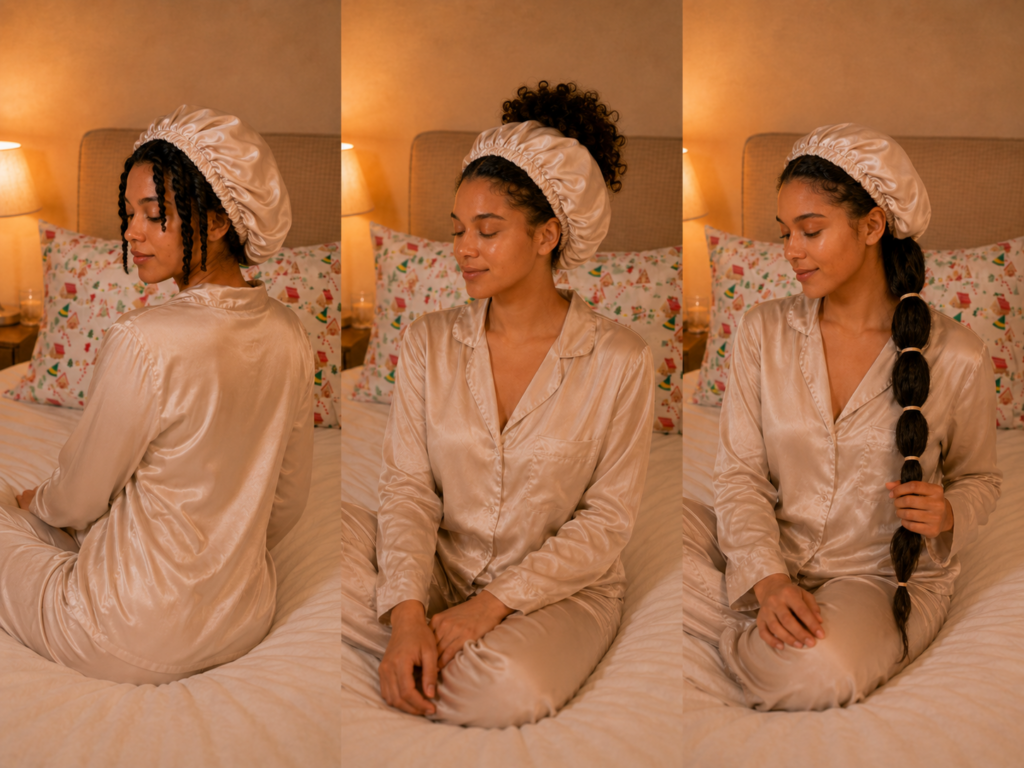
For coily or textured hair
- Multiple loose twists or chunky braids tucked under a bonnet
- Pineapple under a bonnet for shorter coils
- Banding for very long or stretched coils
The common thread: never tight. If you can feel tension at your scalp when you tilt your head, the style is too tight. Loosen it before you go to bed.
Signs Your Nighttime Routine Is Damaging Your Hair
If you’re not sure whether overnight damage is happening, here are the most common warning signs to look for.
- Short broken hairs on your pillow when you wake up. These aren’t shed hairs (which have a small white bulb at the root); they’re snapped mid-shaft hairs caused by friction.
- Persistent frizz that won’t smooth no matter how much product you use during the day.
- Visible thinning at the hairline or temples, especially if you wear tight overnight styles.
- Split ends that keep coming back even after regular trims.
- A dull, flat appearance in the morning that takes extensive styling to fix.
- Scalp irritation or flakes that get worse on your wash days (a sign trapped moisture or bacteria from cotton bedding may be involved).
- Tangles and knots that weren’t there when you went to bed.
- A “matted” patch at the back of your head from constant friction in one spot.
If you see two or more of these consistently, your overnight routine needs an upgrade. Start with the pillowcase swap (silk or satin), then layer in the protective style and leave-in treatment. Most people see results within two to three weeks: less morning frizz, fewer broken hairs on the pillow, and smoother strands without extra styling time.
And if you tend to refresh your hair the next morning with a quick spray rather than rewashing, our guide on how to use dry shampoo covers the right way to do that without adding scalp buildup on top of overnight oil. For the bigger picture on whether overuse can actually affect your strands, see our breakdown of does dry shampoo cause hair loss.