Walk down any hair care aisle, or scroll a single beauty retailer online, and you are looking at hundreds of bottles, every one promising shinier, thicker, healthier hair. So when someone asks what the best shampoo and conditioner is, the honest answer frustrates people at first: there is no single winner. The best formula is the one matched to your hair type, your scalp, and what your hair is going through right now. A bottle that transforms fine, oily hair can flatten and weigh down thick curls, and a rich repairing pair that rescues bleached strands will leave a fine-haired person greasy by lunchtime.
What that means in practice is that finding your best shampoo and conditioner is less about chasing the most hyped launch and more about reading your own hair correctly, then matching it to a formula built for that need. This guide walks through how to do exactly that, with specific product picks by hair type and concern, the ingredients that actually earn their place, and a simple way to test whether a new pair is working before you commit to a full bottle.
Start With Your Hair Type, Not the Marketing
Before you read a single front-of-bottle claim, get clear on what your hair and scalp actually need. Almost every well-made formula is engineered around one specific profile, and matching that profile is most of the battle.
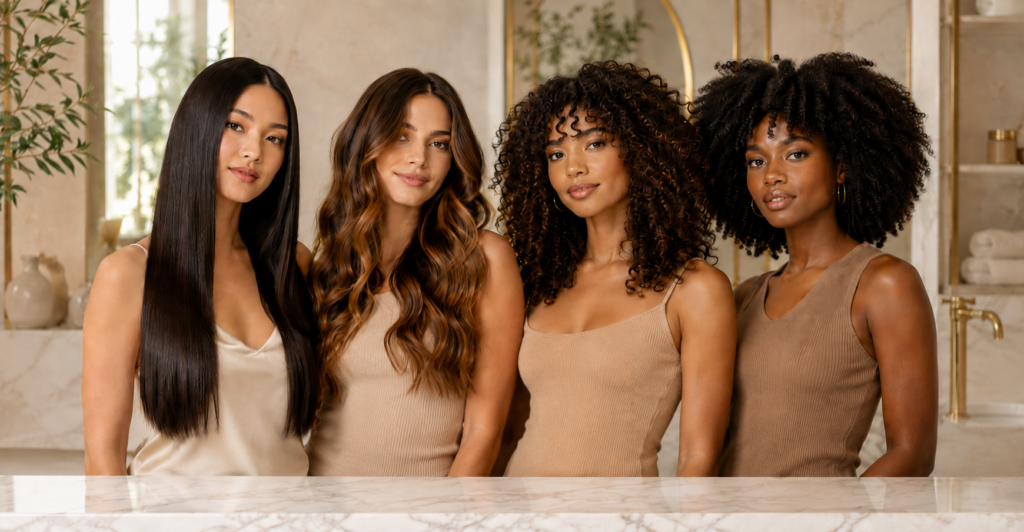
The quickest way to read your hair is to look at how it behaves two days after washing. If your roots feel greasy and your scalp looks shiny, you lean oily and want a lighter, balancing formula. If your ends feel dry, rough, or flyaway while your roots are fine, you lean dry and need moisture concentrated through the lengths. Hair that snaps easily, feels gummy when wet, or has lost its stretch is damaged, usually from color, heat, or chemical processing, and wants strengthening and bond-repair ingredients. Tight, springy curls and coils almost always run dry by nature, because natural oils struggle to travel down a curved strand, so they crave the richest moisture of any hair type.
Plenty of people have more than one of these at once, like an oily scalp with dry ends, and that is completely normal. In that case you treat the scalp with your shampoo and the ends with your conditioner, which is how the two products are designed to divide the work anyway. The way you actually wash and condition matters just as much as which bottle you buy, so it is worth getting the technique right alongside the product.
The Best Shampoo and Conditioner by Hair Type and Concern
These picks pull from what dermatologists, trichologists, and salon stylists consistently recommend, grouped by the need they solve. Prices shift constantly and formulas get reformulated, so treat the dollar figures as rough guides rather than fixed numbers, and always check the current ingredient list before you buy.
Best Overall for Most Hair Types
For a do-everything pair that suits the widest range of hair, Olaplex No. 4 Bond Maintenance Shampoo and No. 5 Conditioner are the reference point the rest of the category gets measured against. Their signature bond-building ingredient works to repair the internal links inside the hair shaft, which is why the pair leaves most hair feeling stronger and less frizzy after a couple of weeks, while still being gentle enough for regular use. They are sulfate-free and color-safe, which broadens who they work for, though very fine hair may find them a touch heavy and want to keep the conditioner to the ends only.
Best for Color-Treated Hair
Color is an investment, and a harsh shampoo strips it fast. Pureology Hydrate Shampoo and Conditioner are a long-standing salon favorite here, built sulfate-free specifically to protect tone while restoring moisture that bleaching and dyeing pull out. Olaplex No. 4 and No. 5 are also an excellent color-safe choice if you want repair and color protection in one system. For brunettes and especially for blondes, you will eventually want to layer in a toning product too, which is where purple shampoo earns its place once a week to keep brassiness in check.
Best for Dry or Damaged Hair
When hair is parched, brittle, or fried from heat tools, the goal is moisture plus repair. Living Proof Restore Shampoo and Conditioner smooth and strengthen with the brand’s patented healthy-hair molecule while staying surprisingly lightweight, which makes them a smart pick if your hair is damaged but not coarse. Moroccanoil Hydrating Shampoo and Conditioner lean richer and are a reliable rescue for very thirsty hair, and Pureology Nanoworks Gold sits at the luxury end for brittle, color-treated strands. For the most severely damaged hair, pair your wash with a weekly bond treatment such as Olaplex No. 3 or a K18 leave-in mask, both of which work on the structural repair a shampoo alone cannot fully deliver. The protein side of this story is worth understanding, and our piece on keratin formulas explains how to add strength without overdoing it.
Best for Curly and Coily Hair
Curls and coils need slip, moisture, and gentle cleansing. Briogeo Curl Charisma Shampoo and Conditioner are widely recommended for defining curls while keeping them hydrated, and Carol’s Daughter Wash Day Delight is a popular, more affordable option whose gentle lather still clears buildup without stripping. Ouai also makes well-loved, fragrance-forward formulas that suit looser waves and curls. The golden rule for this texture is to avoid harsh sulfates entirely, since they leave curly hair dry, frizzy, and undefined.
Best for Fine or Thin Hair
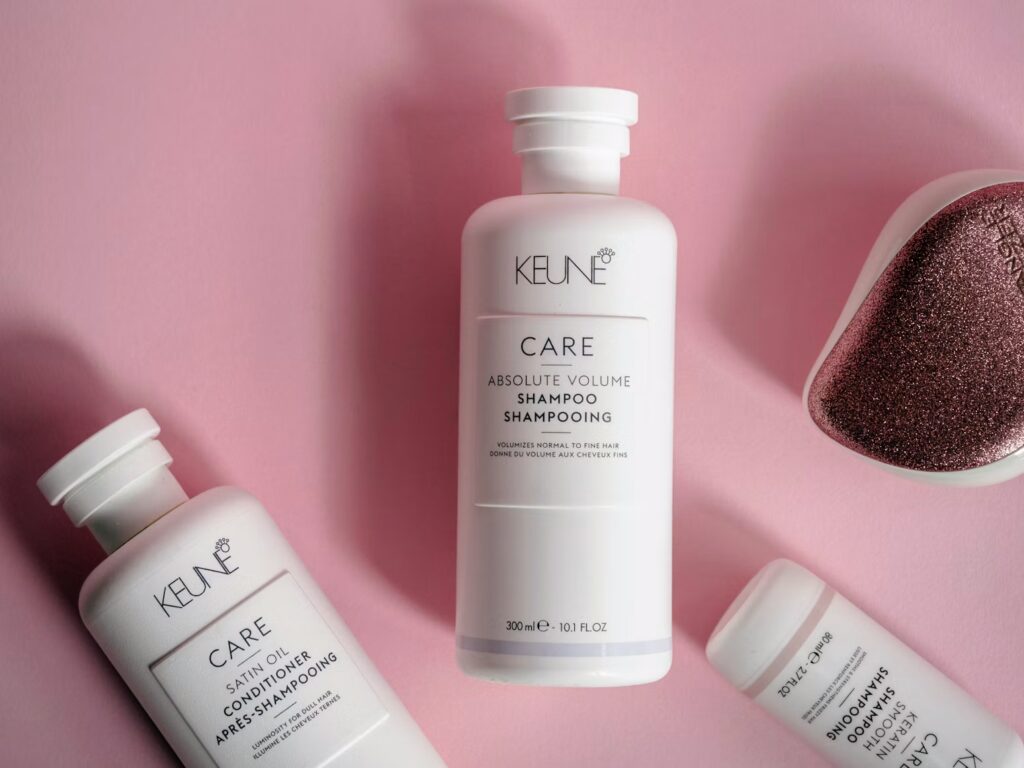
Fine hair wants lift, not weight. Living Proof Perfect Hair Day Shampoo and Conditioner clean and add body while resisting the buildup that flattens delicate strands, and any formula labeled volumizing and lightweight is your friend here. The technique tip matters as much as the product: keep conditioner to the mid-lengths and ends only, well away from the roots, so your hair does not fall flat.
Best for Sensitive Scalps
If your scalp itches, reacts, or flushes easily, fragrance is the most common culprit, since “fragrance” on a label can legally hide dozens of undisclosed ingredients. Dermatologist-designed, fragrance-free pairs like SEEN and Nécessaire’s Scalp Duo are formulated for reactive, eczema-prone, and acne-prone skin, cleansing well without leaving the scalp stripped or irritated. These are also a good landing spot if you have tried everything and your scalp still rebels.
Best for Dandruff and Flaky Scalp
Flaking usually responds to an active ingredient, not just a gentler shampoo. Nizoral uses ketoconazole and is the go-to for stubborn, recurring dandruff. CeraVe Anti-Dandruff Shampoo pairs zinc pyrithione with hydrating ceramides, which makes it gentle enough for frequent use, and Neutrogena T/Sal uses salicylic acid to lift thicker, stuck-on flakes. Dermatologists often suggest alternating a medicated shampoo with a moisturizing one so the scalp does not over-dry. Worth knowing for budgeting: a medicated dandruff shampoo prescribed for a diagnosed condition can sometimes be reimbursed, which we cover in our breakdown of what is FSA and HSA eligible.
Best for Thinning Hair
For hair that is shedding or thinning, shampoo plays a supporting role around the real treatments, but a good one helps. Nutrafol Root Purifier targets the scalp microbiome, and physician-sold lines like KeraFactor use peptide complexes aimed at scalp and follicle health. Set expectations honestly here, because no shampoo regrows hair on its own, a fuller story we get into in our guide to hair-growth formulas.
Best Drugstore and Budget Picks
You do not need a luxury bottle to take good care of your hair. CeraVe offers gentle, dermatologist-backed shampoos at drugstore prices, Carol’s Daughter delivers strong value for curls and coils, and many L’Oréal Elvive and Dove formulas now use the same core ingredients as pricier rivals. A thoughtfully chosen drugstore pair that matches your hair type will outperform an expensive one that simply was not built for your texture.
What the Best Formulas Have in Common
Across every price point, the products worth your money share a few traits. They lead with ingredients that target a real need, like glycerin and hyaluronic acid for moisture, keratin and bond-builders for damaged strands, or zinc and salicylic acid for the scalp. They keep harsh elements low or out entirely, which is why so many quality lines are now sulfate-free and skip the short-chain drying alcohols that leave hair brittle. And crucially, the shampoo and conditioner are designed to work as a system, which is exactly why brands sell them as a pair.
This is also why your shampoo and conditioner do not strictly need to be the same brand, but they should share the same purpose. A repairing shampoo paired with a volumizing conditioner sends your hair mixed signals, while two products aimed at the same goal reinforce each other. If you want to go deeper on the label, our rundown of ingredients worth skipping is a useful checklist before you buy.
What Salons and Stylists Actually Use
There is a reason people ask what salons use behind the chair. Professional lines tend to use higher concentrations of active ingredients, more refined surfactants, and a better overall feel and fragrance, and that is part of what you pay for. Brands like Olaplex, Pureology, Living Proof, Moroccanoil, and Kérastase show up again and again in salons for this reason.
That said, salon quality is not a regulated term, and the gap between professional and drugstore formulas has narrowed a lot. You do not need the most expensive bottle on the shelf. You need the right ingredients for your hair, whatever they cost. Plenty of stylists will quietly tell you that a well-matched drugstore pair beats a prestige one used on the wrong hair type.
How to Test a New Pair the Right Way
Finding your match takes a little patience, so give any new shampoo and conditioner a fair run of two to three weeks before you judge it. Your hair and scalp need time to adjust, especially if you are switching away from a silicone-heavy formula, and the very first wash is rarely the full story.
Watch for the signs of a genuine fit: hair that feels clean but not stripped, soft but not greasy, and noticeably easier to detangle and style. The signs of a poor match are just as clear, like itchiness, buildup, limpness, or dryness that worsens instead of improving. When something is plainly fighting your hair, switch. You are never obligated to finish a bottle that does not work, and if you tend to stockpile backups, it is worth knowing how long they last before they turn.
For an unbiased, science-led overview of ingredients and hair types, the American Academy of Dermatology maintains some of the most trustworthy free guidance available, and it is a good sanity check against any product that promises more than a shampoo realistically can.