
Keratin has become one of the most marketed words in all of hair care, stamped across bottles that promise smoother, stronger, frizz-free strands and shinier results within a week. But there is a surprising amount of confusion packed into that one word.
People are not sure what keratin shampoo and conditioner actually does, whether it is the same thing as the keratin treatment they get at a salon, and whether any of it is safe given the headlines about smoothing products. Let us clear all of that up, because the answers are genuinely useful for deciding whether keratin belongs in your routine.
What Keratin Is and Why Your Hair Loves It
Here is the foundation everything else rests on. Keratin is a protein, and it happens to be the main structural building block your hair is already made of. Your strands are mostly keratin, arranged in tightly bundled fibers wrapped in a protective outer layer called the cuticle. Over time, heat styling, coloring, sun exposure, friction, and ordinary daily wear chip away at that protein structure, lifting and cracking the cuticle. That damage is precisely why tired hair feels rough, looks dull, snaps easily, and frizzes at the first hint of humidity.
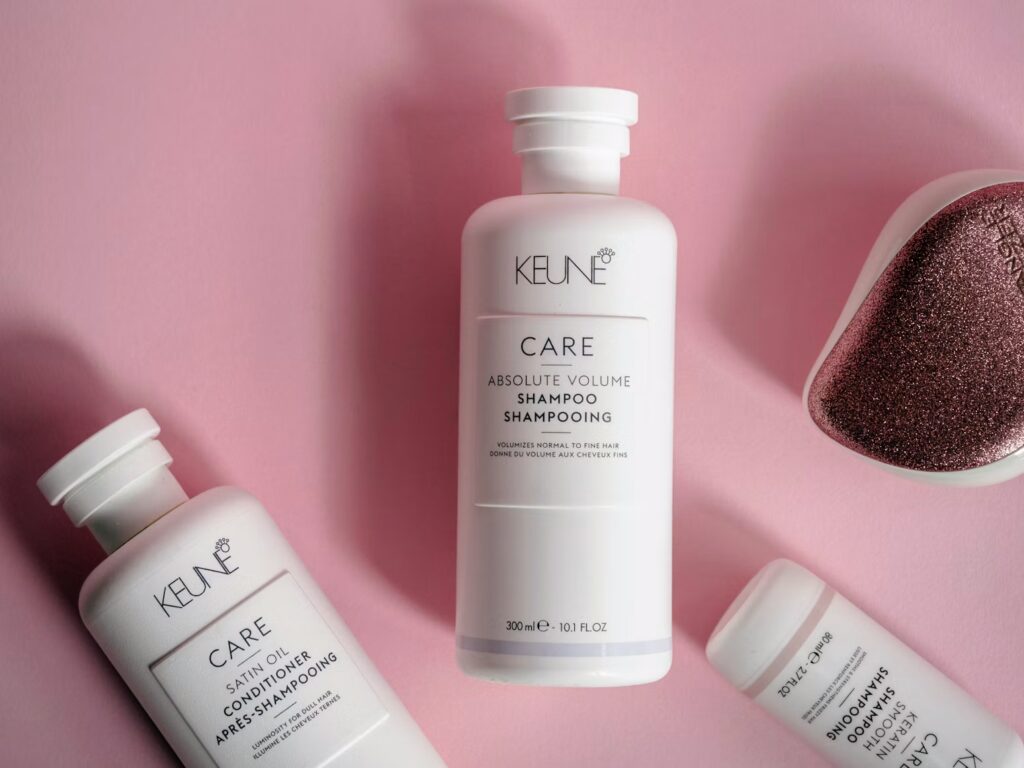
Keratin shampoo and conditioner are formulated with hydrolyzed keratin, a version of the protein broken down into pieces small enough to cling to the hair shaft and slip into the gaps along a damaged cuticle. The idea is to temporarily fill and smooth those rough spots so hair lies flatter, reflects light better, and feels stronger. In effect, you are topping up some of the protein your hair has lost, which is a different job from simply adding moisture, the role most conditioners and the right everyday pair are built around.
What Keratin Products Actually Do for Your Hair
Used consistently, a good keratin pair delivers real, visible benefits. Hair tends to look smoother and more frizz-resistant, which is especially noticeable in humid weather when other hair puffs up. It feels stronger and less prone to snapping, because the added protein reinforces weak points along the strand. And it picks up shine, since a smoother cuticle reflects light more evenly instead of scattering it.
It is just as important to be honest about the limits. Keratin shampoo will not chemically straighten your hair, and the effects are temporary. They build up gradually with regular use and wash out over time, which is completely normal and not a sign the product has failed. It is simply how any wash-out treatment behaves. If you want permanent smoothing, that is a salon service, and a very different proposition.
Keratin Shampoo Is Not the Same as a Keratin Treatment
This is the single biggest source of confusion, and the distinction matters for safety as well as results, so it gets its own section.
A keratin shampoo and conditioner is a wash-day product you use at home, and its effects are gentle, surface-level, and temporary. A salon keratin treatment or Brazilian blowout is an entirely different thing. It is a chemical service in which a product is applied to the hair and then sealed in with a flat iron at high heat, smoothing and relaxing the hair for weeks or even months.
The reason the difference is more than academic comes down to ingredients. Some professional smoothing treatments contain formaldehyde or formaldehyde-releasing chemicals, which can give off fumes when heated during application and have been linked to health concerns for both clients and the salon workers exposed to them repeatedly. The U.S. Food and Drug Administration proposed banning these ingredients in hair-smoothing products back in 2023, but as of early 2026 that ban has still not taken effect, after the agency missed its own deadline several times, most recently at the end of 2025. That ongoing limbo makes it more important, not less, to ask your stylist exactly what is in any in-salon treatment before you book it. An at-home keratin shampoo does not involve that heat-sealing process, so it does not carry the same fume risk, but it also is not a replacement for the salon result. The broader ingredient picture is something we dig into in our guide to what to skip on a label.
How to Use Keratin Shampoo and Conditioner
To get the benefit without overshooting, the key is to treat protein as something to balance rather than pile on, because hair needs both protein and moisture to stay healthy and flexible.
Use keratin products two to three times a week rather than at every wash, and pair them with a hydrating conditioner or mask on your other wash days so your strands get moisture as well as strength. Keep an eye out for the warning signs of protein overload, which shows up as hair that feels stiff, straw-like, crunchy, or brittle instead of soft and elastic. If that happens, simply scale back the keratin and lean into moisture for a couple of weeks until the balance is restored.
There is one scenario where keratin shampoo is an especially smart pick. If you have recently had a salon smoothing service, a sulfate-free keratin shampoo helps maintain it, because harsh detergents strip a smoothing treatment out faster. Getting your basic washing routine right protects that investment too.
For the current regulatory status of the smoothing ingredients discussed above, the FDA’s page on hair smoothing products that release formaldehyde is the authoritative source on why these formulas remain under review rather than banned, and it is worth a read before any chemical straightening service.