
Summer feels like the season your hair pays for. The same sun-drenched afternoons that leave your skin glowing also bake your strands dry, fade your color, and roughen the cuticle until your hair feels straw-textured by August. Add chlorine from the pool, salt from the ocean, sweat from the heat, and the daily damage stacks faster than people realize.
Learning how to protect your hair from summer damage takes some preparation, but the routine is genuinely simple once you know what’s actually causing the harm. This guide breaks down what UV rays, chlorine, and saltwater do to your hair, the pre-swim and post-swim steps that prevent 90% of the damage, the best products for sun and water protection, and how to spot the signs that summer has already done a number on your strands.
How Summer Actually Damages Your Hair
Most people connect summer damage with one thing: dryness. But the reality is more complicated, and the four main culprits each cause different types of damage that compound over time.
UV rays break down the hair shaft
The sun’s UVA and UVB rays damage the outside of the hair strand, called the cuticle. According to Conscious Coconut’s breakdown of UV hair damage, prolonged sun exposure breaks down the keratin protein that gives your hair its structure, leaving strands brittle, faded, and more prone to breakage.
The damage isn’t always obvious because it happens slowly. By the time you notice your hair looks dull and stiff, you’ve already lost weeks of cuticle integrity. UV rays also oxidize hair pigment (both natural and dyed), which is why blondes turn brassy, reds turn pale, and dark hair can develop a reddish tint by late summer.
Chlorine strips natural oils and binds to proteins
Chlorine is one of the harshest chemicals your hair encounters all year. It strips sebum (your scalp’s natural oil) from each strand and binds to the protein structure inside the hair shaft. The result is dryness, brittleness, and a chemical fade that’s especially harsh on color-treated hair.
For blondes, chlorine can react with copper minerals in pool water and turn hair a green or grayish-green tint. This isn’t from the chlorine alone, it’s the chlorine oxidizing copper and depositing it onto porous strands. Hair that’s been bleached or highlighted is particularly vulnerable because the lifted cuticle allows minerals to penetrate deeper.
Saltwater dehydrates and lifts the cuticle
Ocean water is hypertonic, which means it pulls moisture out of your hair through osmosis. As salt crystals dry on your strands, they lift the cuticle and leave your hair rough, tangled, and visibly thirstier than usual. Salt also strips natural oils, which is why beachy waves look great for a few hours but feel like straw by the next morning if you don’t rinse and treat.
Heat and humidity reshape your styling
High humidity causes the hair shaft to absorb moisture from the air, which expands the cuticle and creates frizz. The combination of high heat and humidity can also intensify sweat production at the scalp, which mixes with sebum and styling products to cause buildup, irritation, and even temporary scalp acne.
UV Rays: Why Your Hair Needs Sunscreen Too
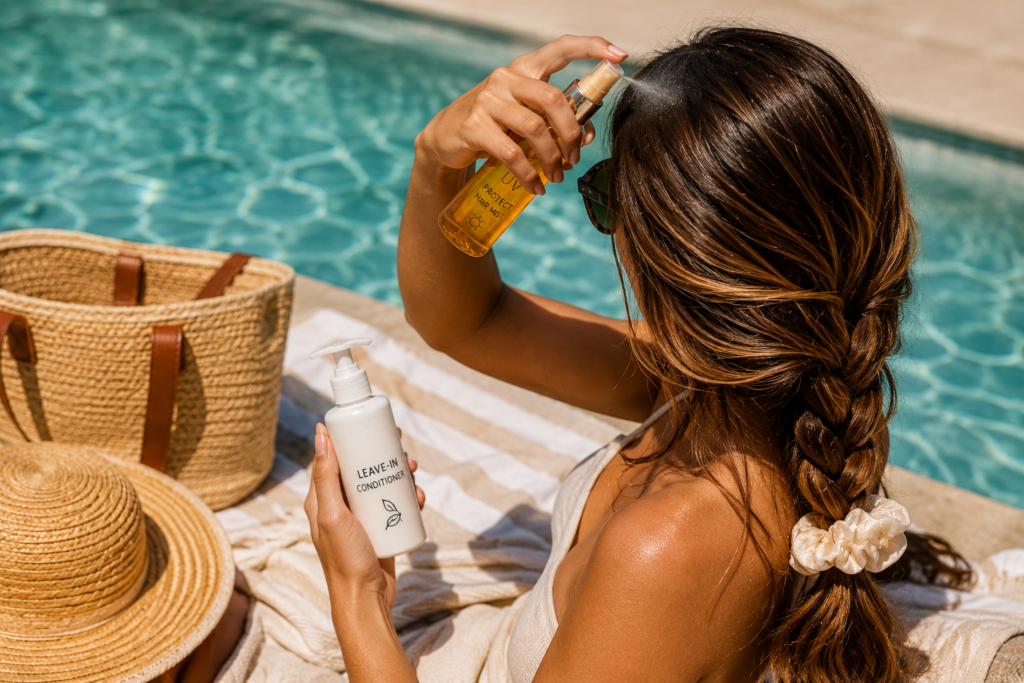
Most people slather sunscreen on their face and forget that their hair has been collecting UV damage for hours. Hair doesn’t burn the way skin does, but it absolutely deteriorates from prolonged sun exposure.
What UV damage actually looks like
- Color fading. Reds, blondes, and pastels fade fastest, but even natural brunettes notice a reddish or copper shift by August.
- Brittle, straw-like texture. The cuticle becomes rough, light no longer reflects evenly, and hair loses its shine.
- Split ends multiplying. UV damage weakens the protein bonds at the ends, where the hair is already the most fragile.
- Increased porosity. Sun-damaged hair absorbs and loses moisture faster, which makes it harder to keep hydrated.
- Scalp burn and flaking. Often missed, but your scalp is skin and can sunburn at the part line, leading to peeling and inflammation.
How to actually protect against UV damage
Wear a hat or scarf. The most effective method is also the simplest. A wide-brimmed hat shields both your hair and scalp, especially during peak sun hours between 10am and 4pm.
Use a UV-protectant spray. Look for hair-specific products with UV filters. Popular options include Kérastase Soleil UV Mist, Oribe Invisible Defense Universal Protection Spray, and Sun Bum 3 in 1 Leave In Hair Conditioner. Reapply every two to three hours just like you would with skin sunscreen.
Don’t forget your scalp. Apply scalp-specific UV protection at the part line. Coola Scalp & Hair Mist SPF 30 and Supergoop! Poof Part Powder SPF 35 are designed specifically for the scalp.
Try protective hairstyles. Braids, buns, and twists reduce the surface area exposed to direct sun. A loose braid is one of the easiest ways to cut UV exposure in half without changing your routine.
A healthy scalp is the foundation for healthy hair, especially in summer when sun and sweat work together to disrupt the balance. For more on keeping your roots in shape, see our scalp care tips for healthier hair growth.
Chlorine Damage: What Pools Do To Your Hair
Pool water might feel refreshing, but it’s chemically aggressive to hair. Chlorine is a disinfectant designed to kill bacteria, and the same properties that make it effective in pool maintenance are what damage your strands.
What chlorine does to hair
- Strips natural oils from the scalp and cuticle, leaving strands dry and rough
- Binds to protein in the hair shaft, weakening the internal structure
- Reacts with copper in pool water to deposit greenish tones (especially on blonde or porous hair)
- Fades hair color (both natural pigments and salon dye)
- Roughens the cuticle, making hair tangle-prone and frizzy
- Triggers scalp irritation in sensitive individuals, leading to itching or flaking
How to protect against chlorine damage
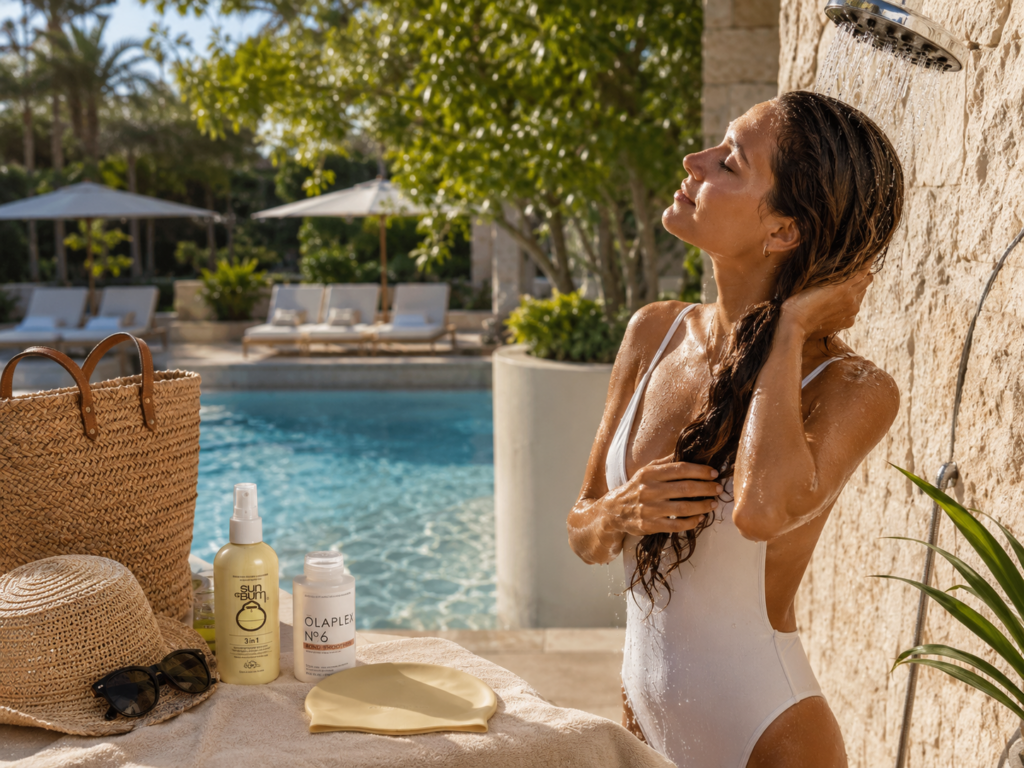
Wet your hair with fresh water before swimming. This is the single most effective protection step. Wet hair is already saturated, so it absorbs significantly less chlorinated water. According to Lovisa Salon’s protection guide, this one habit can dramatically reduce the chemical buildup on your strands.
Apply a leave-in conditioner before getting in. A lightweight conditioner creates a protective barrier that prevents chlorine from binding directly to the hair shaft. Recommended: Olaplex No. 6 Bond Smoother or Davines Sun Protective Hair Veil.
Wear a swim cap if you swim regularly. It’s not the most stylish option, but a silicone swim cap is the most reliable barrier. For frequent swimmers (especially blondes), it’s worth considering.
Rinse immediately after getting out. Don’t let chlorine sit on your hair. A quick rinse with fresh water (even from a bottle if you’re not near a shower) removes the residue before it can cause further damage.
Use a clarifying shampoo within 24 hours. Chlorine residue clings to hair until you wash it out thoroughly. A weekly clarifying wash during pool season removes mineral and chemical buildup. Recommended: Number 4 Clarifying Shampoo or K18 Detox Shampoo.
If you stretch washes by using dry shampoo between pool days, our guide on how to use dry shampoo covers how to refresh without piling more residue onto already-stressed strands.
Saltwater And The Ocean: Beachy Hair Cost
Saltwater feels romantic. The beachy texture is genuinely beautiful for a day. But salt is one of the harshest things you can do to your hair on repeat.
What saltwater does to hair
- Dehydrates the hair shaft through osmosis, pulling moisture out of each strand
- Lifts the cuticle, leaving hair rough and tangled
- Strips natural oils from the scalp and lengths
- Fades color, especially on chemically treated hair
- Crystallizes on strands as it dries, causing micro-abrasions during brushing
- Can cause scalp dryness and flaking when salt builds up at the root
How to protect against saltwater
Pre-wet your hair with fresh water. Same principle as pool protection. Wet hair absorbs less salt.
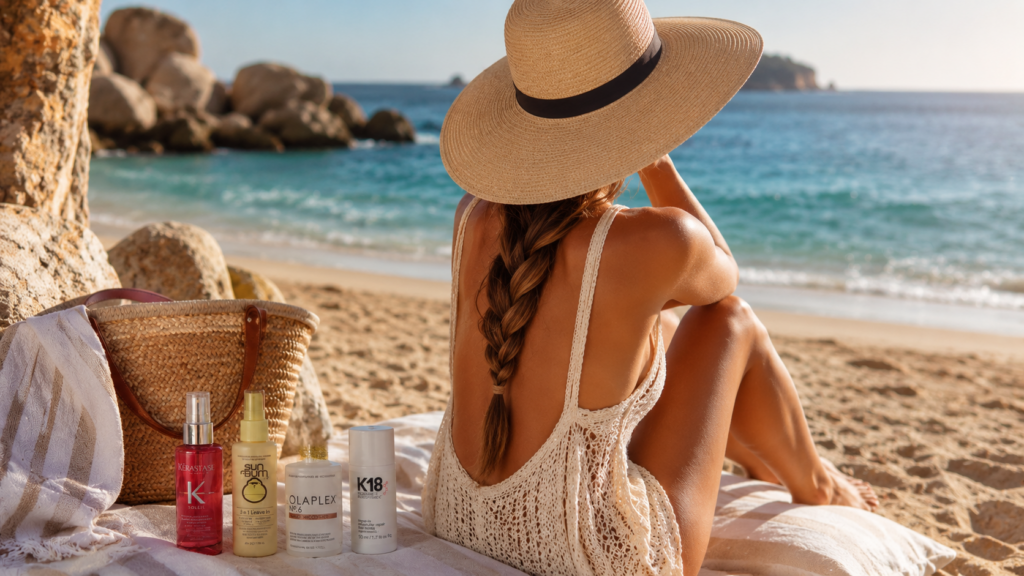
Apply a hair oil or leave-in before the beach. Coconut oil, argan oil, or a silicone-free hair serum creates a barrier. Recommended: Briogeo Farewell Frizz Smoothing Shine Hair Oil or pure organic coconut oil applied generously to the lengths and ends.
Braid it before you swim. A loose braid keeps strands organized and dramatically reduces tangling. Add a leave-in conditioner before braiding for extra protection.
Rinse quickly after every swim. Salt continues to dehydrate hair as it dries, so the longer it sits, the more damage accumulates. A quick rinse with fresh water from a beach shower or bottle is enough to neutralize most of the salt.
Use a hydrating mask weekly. Salt strips moisture, so beach season is the time to ramp up your deep conditioning routine. A weekly mask restores what saltwater pulls out.
How To Protect Your Hair Before Swimming
The pre-swim routine is where most of the damage prevention happens. Five minutes of preparation saves you weeks of repair work later.
The pre-swim sequence
- Wet your hair completely with fresh water at the shower or sink before heading to the pool or beach. Saturated hair absorbs less chemical or salt water.
- Apply a leave-in conditioner or hair oil generously through the mid-lengths and ends. This creates a barrier that prevents direct chemical or salt contact.
- Add a UV-protectant spray if you’ll be in the sun. Spray evenly across the entire head, including the part line.
- Braid or bun your hair to reduce exposed surface area and prevent tangling. A loose fishtail braid works for medium to long hair.
- Skip styling products that contain salt or alcohol before swimming, since they can amplify the dehydration effect.
This entire routine takes about five minutes and reduces summer damage by a noticeable margin.
How To Care For Hair After Pool Or Ocean
What you do in the first hour after swimming matters as much as the prep. Salt and chlorine continue damaging hair as they dry, so the faster you neutralize them, the better.
The post-swim sequence
Step 1: Rinse with fresh water immediately. Even if you can’t get to a proper shower, a beach shower or water bottle rinse removes most of the chemical residue.
Step 2: Clarify within 24 hours. Use a clarifying or chelating shampoo to remove chlorine, salt, copper minerals, and pool chemicals. Don’t skip this even if your hair looks fine.
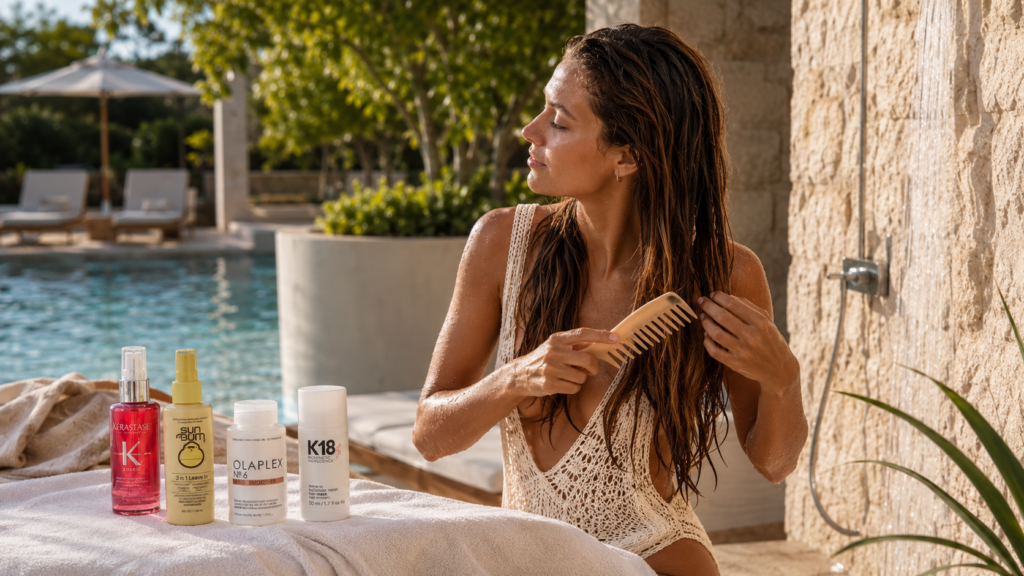
Step 3: Apply a deep conditioner or mask. Replenish the moisture saltwater and chlorine just stripped. Leave on for at least five to ten minutes. Recommended: Olaplex No. 8 Bond Intense Moisture Mask, K18 Leave-In Molecular Repair Mask, or Briogeo Don’t Despair Repair Deep Conditioning Mask.
Step 4: Detangle gently. Salt and chlorine leave hair tangled. Use a wide-tooth comb and start from the ends working up to the roots. Never tug at knots when wet.
Step 5: Air-dry when possible. Skip the blow dryer when your hair is already stressed from sun and chemicals. Letting it air-dry under a fan or in cool shade is the gentlest option.
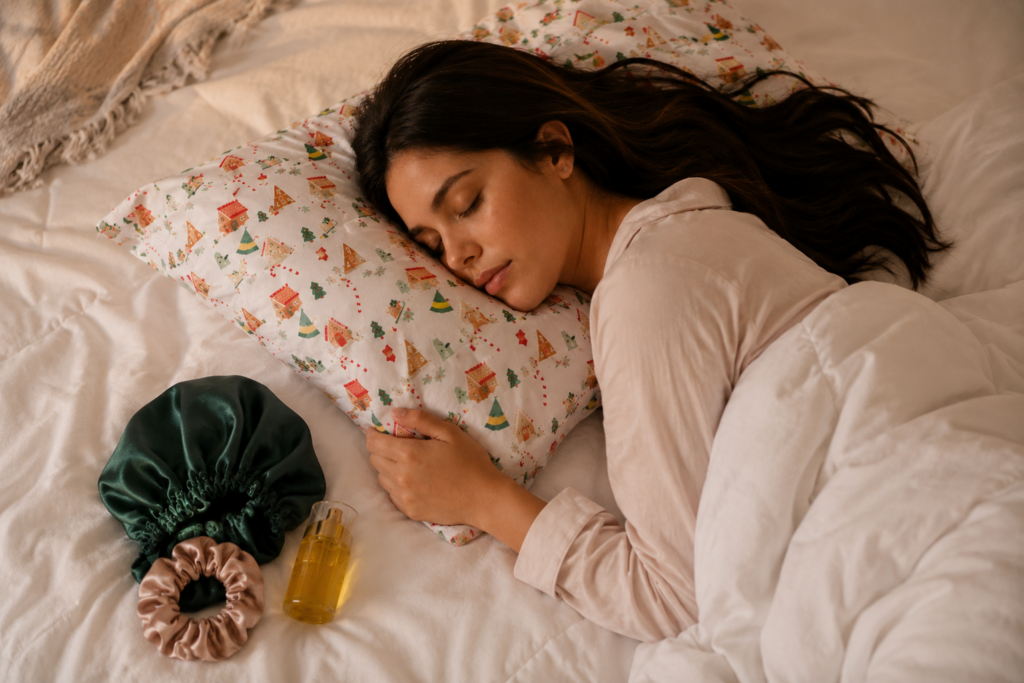
Step 6: Sleep on a silk pillowcase that night. Sun-exposed, chlorinated, and salt-soaked hair is in its most fragile state. Cutting overnight friction makes a real difference in next-day texture. Our guide on how to protect your hair while sleeping covers the full overnight routine.
Daily Summer Hair Care Routine (Step By Step)
Here’s a complete summer routine you can adapt based on your activity level. The whole thing takes about ten minutes a day, plus weekly treatments.
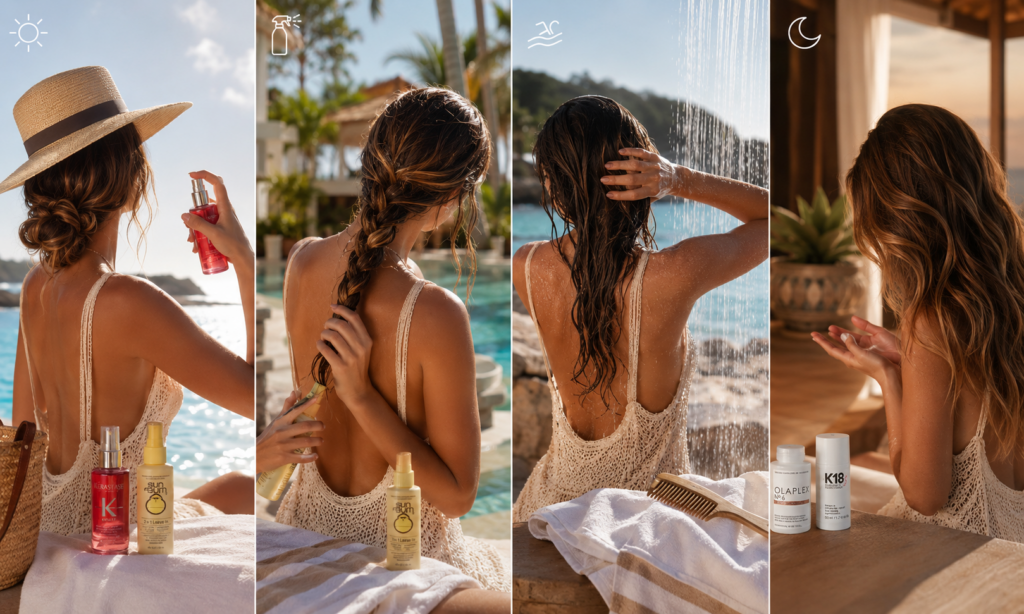
Morning
- Apply a UV-protectant spray to dry or damp hair before going outside
- Tie hair in a loose braid or bun if you’ll be in direct sun for extended periods
- Wear a wide-brimmed hat for additional protection
Pre-swim
- Wet hair with fresh water
- Apply leave-in conditioner or oil
- Braid before getting in
Post-swim
- Rinse with fresh water immediately
- Clarify within 24 hours
- Deep condition
Evening
- Wash with a gentle, hydrating shampoo if you’ve been out all day. For the full technique, see our complete guide to wash your hair properly.
- Apply a hydrating conditioner to the mid-lengths and ends
- Add a leave-in treatment with ceramides or hyaluronic acid to rebuild moisture
- Air-dry or use lowest heat setting with a heat protectant
Weekly
- One clarifying wash to remove all chemical and mineral buildup
- One deep conditioning mask (or two if your hair feels especially fried)
- Trim every six to eight weeks to remove summer split ends before they travel up the shaft
For more on length retention through harsh seasons, our tips to make your hair grow faster covers the small daily habits that protect what you’ve already grown.
Best Summer Hair Care Products
A consolidated list of the most-recommended summer hair care products by category:
UV protection
- Kérastase Soleil UV Mist
- Oribe Invisible Defense Universal Protection Spray
- Sun Bum 3 in 1 Leave In Hair Conditioner
- Davines Sun Hair Milk
Pre-swim leave-ins
Clarifying shampoos for post-swim
Deep conditioning masks
- Olaplex No. 8 Bond Intense Moisture Mask
- K18 Leave-In Molecular Repair Mask
- Briogeo Don’t Despair Repair Deep Conditioning Mask
Scalp protection
Hair oils for daily moisture
Shower filters (for hard water and chlorinated supply)
If you’d rather skip mainstream formulas and mix your own clean leave-ins, our walkthrough on how to make shampoo covers DIY recipes you can pair with a UV-protectant spray.
Summer Hair Protection For Color-Treated Hair
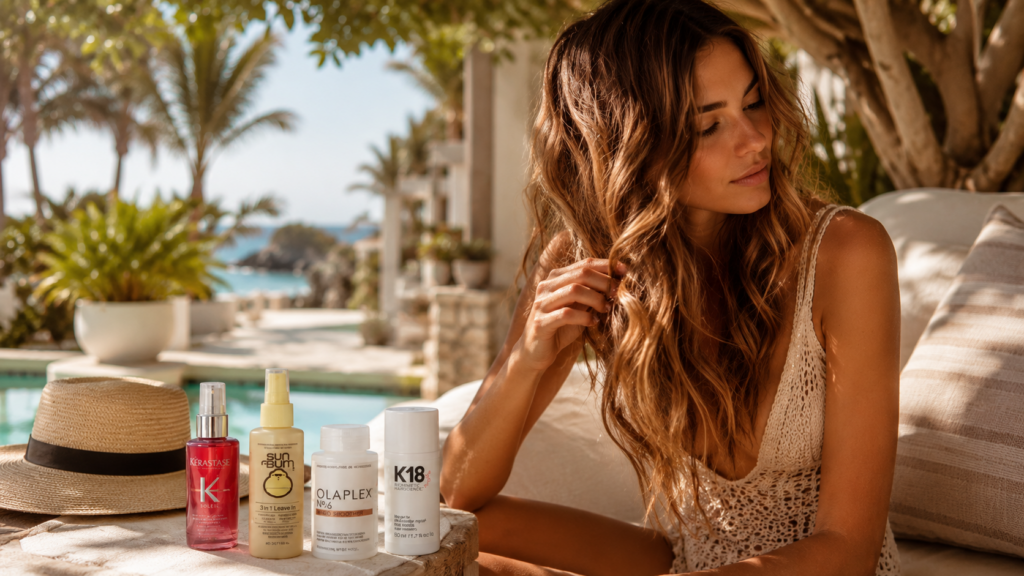
Color-treated hair takes the worst of summer’s damage. The bleaching, lightening, or dye process already opened the cuticle, which means every UV ray, chlorine molecule, and salt crystal has easier access to the inside of the strand. If you’ve invested in a salon color, summer is when that investment is most at risk.
Specific risks for color-treated hair
- Faster color fade from UV oxidation
- Brassiness or yellowing in blondes
- Green tint from chlorine and copper minerals
- Brittleness from compounded chemical exposure
- Increased porosity, which makes future toning and treatments harder to control
Color protection essentials
Use color-protecting shampoos with antioxidants and UV filters. Look for products specifically labeled for color-treated hair.
Tone weekly with a purple shampoo if you’re blonde. Pool chemicals and UV rays bring out warm tones fast in summer. For the full breakdown on timing and frequency, see our guide on how to use purple shampoo.
Avoid hot showers. Hot water opens the cuticle and lets color escape faster. Lukewarm or cool rinses preserve pigment.
Skip heat styling whenever possible. Air-dry, embrace beachy waves, or use heatless curling methods. Summer is a good excuse to give your tools a rest.
Schedule gloss treatments mid-summer. A salon gloss or glaze refreshes color without re-dyeing, restores shine, and reseals the cuticle.
Signs Your Hair Has Summer Damage
If you’re not sure whether your hair has taken a hit, here are the most common signs:
- Increased frizz that wasn’t there in spring
- Color looks faded, brassy, or off-tone
- Texture feels rough or straw-like to the touch
- Tangles form more easily, especially at the back of the head
- Visible split ends multiplying at the tips
- Hair feels heavier on top but limp at the ends (mineral buildup)
- Scalp itches, flakes, or feels tight after sun exposure
- Hair won’t hold style the way it did before
- More short broken hairs when you brush
- A green or grayish tint in blonde or highlighted hair (from pool copper)
- Hair takes longer to dry because it’s absorbing moisture inconsistently (porosity damage)
If you see three or more of these, it’s time for an intensive repair routine: clarifying wash, deep conditioning mask, and a focus on bond-repair treatments like Olaplex or K18. For breakage that’s already showing, our guide on ways to stop hair breakage covers both immediate fixes and prevention going forward.
And if you’ve been noticing more shedding than usual after summer hair stress, our breakdown of does dry shampoo cause hair loss explains how scalp buildup and overuse of certain products can quietly add to the problem when your hair is already stressed.